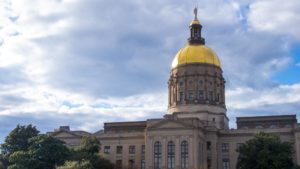

For Georgia to have a fair tax structure, income tax on the wealthiest should increase
GBPI Executive Director Alan Essig weighs in on tax fairness. Read the Op-Ed
Responsible policy that sees the plight of
Everyday working people who
Struggle to make ends meet. Where
Policymakers fight to ensure
Opportunity is within the reach of every person–
Not just the corporation or advantaged or politically-favored. Where
Sustainable effort is made to
Invest in education, workforce development, and our quality of life.Where a
Balanced approach, and not cuts-only, is taken when resources are
Lean and we account for every dollar (on tax side and budget side) before we
Employ belt-tightening measures to get through the tough times. Where
Political games and ideology don’t endanger our
Options for compromise and collaboration and
Leaders work earnestly and purposefully across party lines, even when inconvenient, to
Implement the best strategies that will
Create jobs, grow the economy, put people back to work, and
Yield the best results for our great state and every individual in it.
That’s all I want. Is that too much to ask?
On behalf of the staff at GBPI, we wish you and yours a safe and happy holiday season. Happy Holidays to you and we will see you in the new year ready to implement…Thoughtful Analysis, Responsible Policy.
Policy Analyst Cedric Johnson is quoted by Martha Dalton of WABE on Governor Nathan Deal’s need-based scholarship program. Listen to the broadcast and/or Read the article.
GBPI Executive Director Alan Essig is quoted by Errin Haines (Associated Press) on economic recovery and Georgia’s unemployment rate. Read the news article.

GBPI Senior Policy Analyst Clare S. Richie is quoted in the Nation Magazine by Diana Spatz, executive director of Lifetime, a statewide organization of low-income parents in California who are pursuing postsecondary education and training as their pathway out of poverty. View the news article.
Georgia is investing tens of millions of dollars in business tax incentives and subsidies without any idea as to the impact on jobs. In tight budget times, it’s imperative that all state expenditures whether through the state budget or through the tax code, are held accountable for results. The General Assembly passed legislation requiring the Governor to produce a Tax Expenditure Report each year; however, the current law doesn’t require cost/benefit analysis of individual tax breaks. This means we know what tax breaks cost us; however, we have no idea if we are getting our money’s worth.

Two new national reports highlight this problem.
Good Jobs First, which grades state economic development incentive programs, recently released Money for Something: Job Creation and Job Quality Standards in State Economic Development Subsidy Programs. The study evaluates how well (or poorly) states perform based on the following:
In most of our major subsidy programs, Georgia requires job creation, retention, and training. Georgia, however, didn’t score as well in wage and healthcare requirements. We need to make sure the results of these incentive programs match the legislative intent. The question policy makers can’t answer right now is, where are the jobs?
The Citizens for Tax Justice and the Institute on Taxation and Economic Policy report, Corporate Tax Dodging in the Fifty States, 2008-2010, highlights that 265 companies nationwide paid state income taxes equal to only 3.1% of their U.S. profits between 2008 and 2010, compared to the average statutory state corporate tax rate of 6.2%. The report highlighted five multi-national Georgia-based companies that paid state income taxes equal to only 2.9% of their U.S. profits between 2008 and 2010.These low income tax payments result from corporations taking advantage of various tax breaks and overall favorable tax treatment. Again, are these favorable tax policies resulting in job creation? We have no idea.
To create meaningful tax policies and effective programs that create jobs and grow the economy, the first step is to judge the effectiveness of current policies. Georgia’s basic tax expenditure report, which quantifies the cost of tax breaks, was a good policy step, but more needs to be done. The law needs to be amended to require real analysis of the effectiveness of tax breaks and economic development programs. Are these current policies nothing more than corporate welfare? We need policies that will have a positive economic impact.
Georgia cannot afford to invest tens of millions of dollars into stimulating “economic development” and at the end of the day there are still no new jobs.
Bill Dawers, Savannah Morning News Columnist, features GBPI’s report, State of Working Georgia, in his blog, Savannah Unplugged. Dawers says the report should be required reading for all of Georgia’s state and local politicians. Read blog post.
GBPI’s report, Making a Case for Need-based Financial Aid in Georgia, was referenced in an Athens Banner-Herald Editorial. Read Editorial.
GBPI Senior Policy Analyst Clare S. Richie is quoted in the Atlanta Journal-Constitution on the pending federal unemployment insurance extension bills and their impact on Georgia’s unemployed and local economies . View the news article.
Job one for the governor and legislature is making sure Georgia takes every step possible to help create jobs and build a strong economy.
Doing that requires investment in education, transportation, public safety, and other necessities. So last Friday it was good to hear that revenue rose by 7 % in November and is up 6.8 % for the first five months of the fiscal year that started July 1.

This means Gov. Deal appears to have more revenue to work with than he expected when the FY 2012 budget was originally adopted. His preliminary mid-year budget revenue estimate calls for only a 1.2 percentage point increase in the revenue estimate, or approximately $200 million.
Now for the reality check. Even with additional revenues, there is a significant gap between what we have and what we need, so we could still face spending cuts in the mid-year budget. The Department of Community Health alone faces an approximate $262 million mid-year shortfall. During the summer, the governor acknowledged the shortfall and asked for 2 % cuts in agency budgets (excluding Medicaid and the K-12 QBE funding formula).
Looking ahead to FY 2013 which starts next July 1, the story is similar. Enrollment growth in K-12 schools and the university system, as well as such obligations as providing health care and meeting other needs mean the state needs nearly $1 billion in revenue growth in the next fiscal year. The governor’s preliminary revenue estimate calls for growth of about $850 million. So even with moderate revenue growth we can expect a shortage of several hundred million dollars.
If the response is just to cut — on top of the $3 billion in cuts already taken over the past three years– Georgia’s efforts at job creation and economic recovery will be threatened. That’s why tax reform that increases revenues and allows smart investments in Georgia’s workforce and infrastructure needs to be on the agenda. As part of a balanced approach that includes revenues instead of a cuts-only approach that kills jobs, the General Assembly should take the opportunity to get tax reform right when it comes back next month.