
Poverty alleviation efforts such as TANF, as well as investments in mental health, education and other critical programs, can help reduce crime, and therefore the state’s reliance on the police. However, from 1977 to 2017, Georgia saw a 122 percent increase in spending on police. This increase coincided with an 81 percent decrease in spending on cash assistance for low-income families, a critical safety net program to help families make ends meet Disparate policing practices have also led to the overincarceration of Black Georgiansand there has been an increase in spending on the policing and detention of immigrants. 

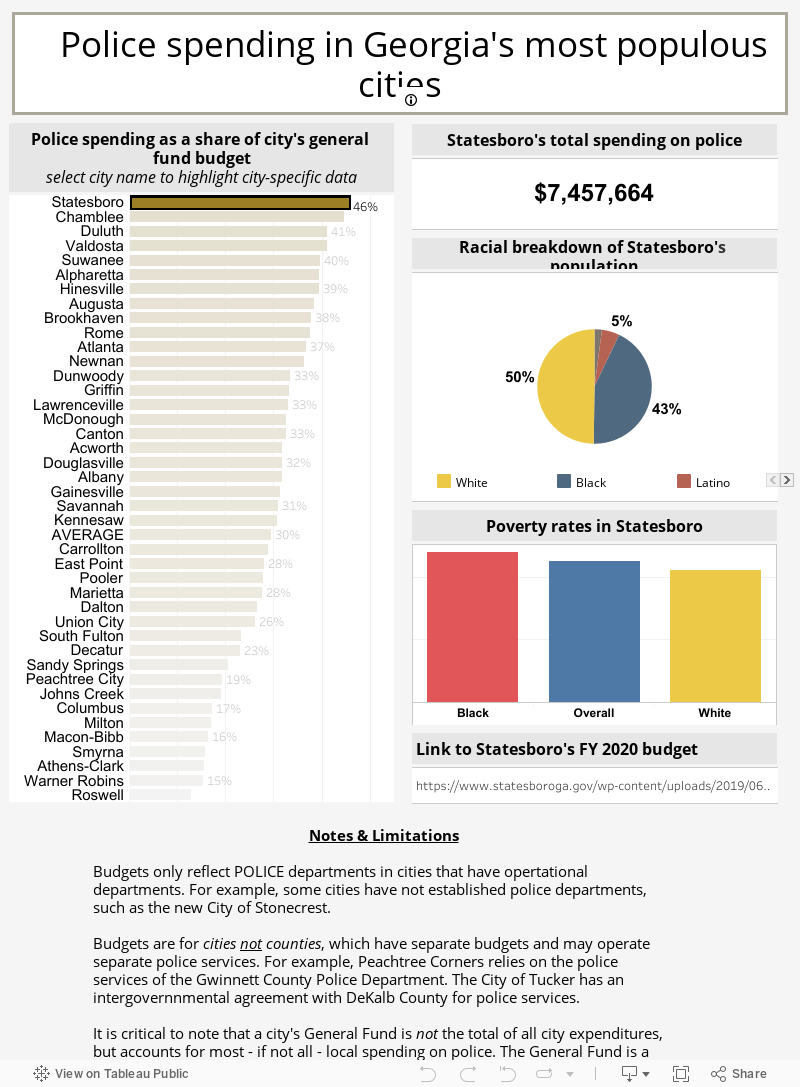
In Georgia, the overwhelming majority of spending on police (85 percent) is funded at the local level. The interactive chart below shows police spending in the most populous cities in Georgia, as well as demographic information for the city.  
Support GBPI Today

The Georgia Budget & Policy Institute is a 501(c)3 organization. We depend on the support of donors like you. Your contribution makes the work that we do possible.

Related Posts

Georgia's 2027 Budget Primer

The budget primer outlines the state budget for the year, recognizes substantial changes from the preceding year and provides a clear-eyed view on what lawmakers have prioritized for our state. This year, there will also be a focus on budget trends over the full eight years of Gov. Kemp’s tenure as we prepare for Georgia’s next leaders to take office.

Our budget primer is slated to be published the first day of the fiscal year, July 1. Join us for our virtual town hall to discuss our data, or request a physical copy of the primer to be sent to your address.

Submit your comment on the Georgia Pathways to Coverage Program

Submit public comment on Georgia’s Pathways to Coverage program extension by February 20th – just complete this easily fillable form: