
 Georgia has a maddening habit. State officials support education policies with real potential to improve teaching and help students learn more. Then, time after time, they don’t invest the money needed to implement these policies effectively or within all districts.
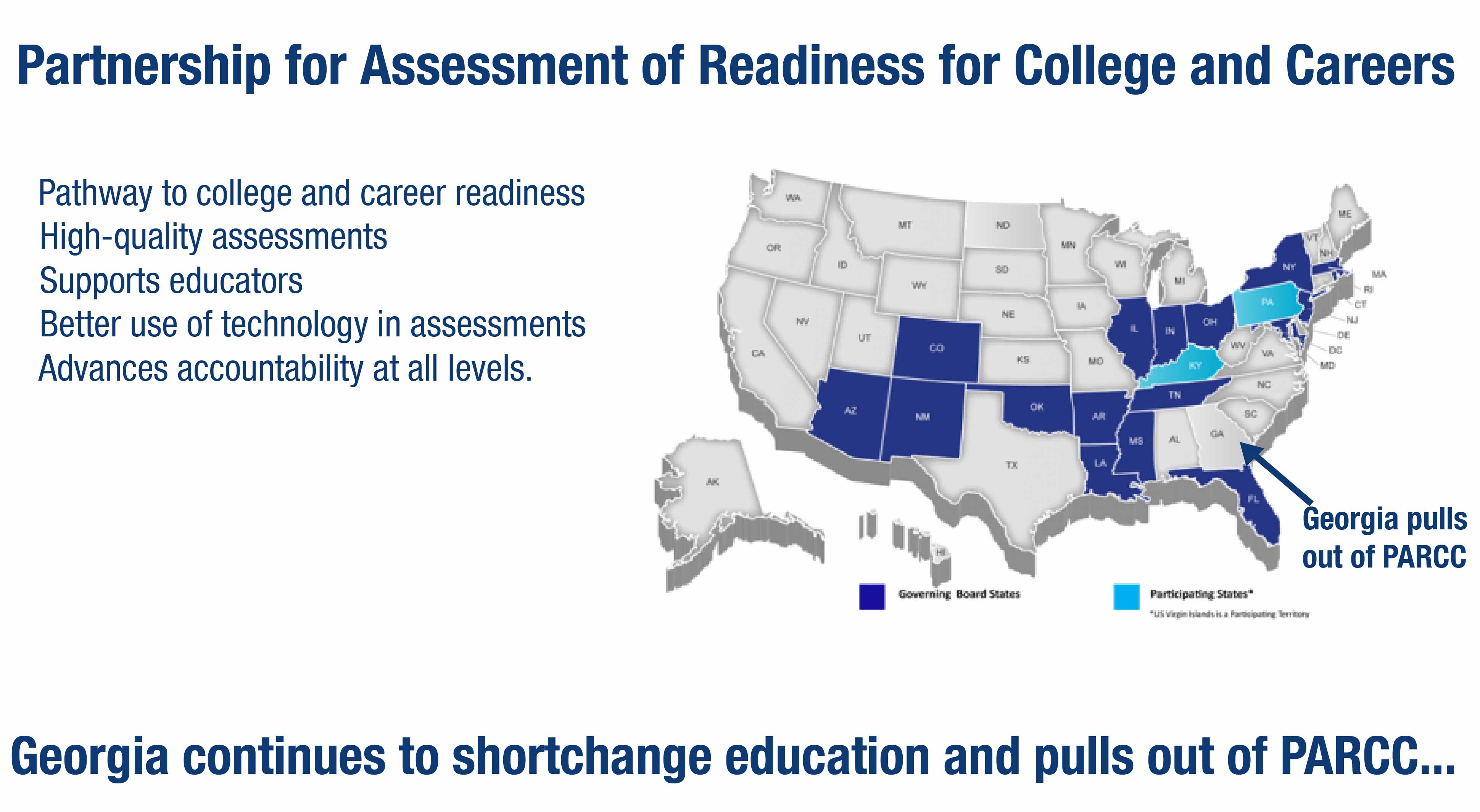
The most recent example of this is the state’s decision to pull out of the Partnership for Assessment of Readiness for College and Careers, or PARCC, a multi-state consortium developing tests in English and math. The PARCC assessments were to replace the Criterion-Referenced Competency Tests, or CRCT, and link to the state’s new performance standards in the two subjects. The assessments are more rigorous, which requires students to demonstrate greater knowledge and more complex skills. They also allow parents, educators, business leaders and other concerned citizens to easily compare how their state’s students perform against their peers across the country. We can’t do that right now.
The proposed tests, though, are expensive, more than double what Georgia is now spending. Still, Georgia spends a lot less on assessments than Maryland and other states. True to form, the state exited PARCC this summer. Georgia still plans to replace the CRCT with new tests, but now with ones of its own design. We don’t know yet if they will be as comprehensive and as rigorous as the PARCC assessments and the results won’t allow comparisons between our students and those in other states.
The state’s also shortchanging other key education initiatives. The Georgia Common Core Performance Standards, new teacher and leader evaluation systems, and a new framework for high quality teacher induction were launched by the Georgia Department of Education with federal Race to the Top funds. These efforts could deliver greater student performance. But the Legislature is still cutting education funding—$1 billion for the new school year. Race to the Top money was essential in getting these quality improvement initiatives off the ground. But that program won’t be around much longer. What happens when that money runs out? Will lawmakers make the required investment to implement and sustain these promising initiatives as standard practice in all of our schools? Or will these grand plans be relegated to Georgia’s scrap heap of good ideas that might have been? Let’s hope not. Our students’ academic success requires a great deal more than good intentions.
